Earning from Amazon KDP has changed over the years. Thousands of books are published each month, so visibility is a big concern.
Simply uploading a book does not guarantee sales.
In fact, many authors spend weeks, or even months, creating a book only to discover that nobody is buying it.
Why?
Because successful KDP publishing isn't just about writing a book. It's about creating a book readers can actually find.
Here's a simple 7-step framework that will help you avoid many of the mistakes new authors make.
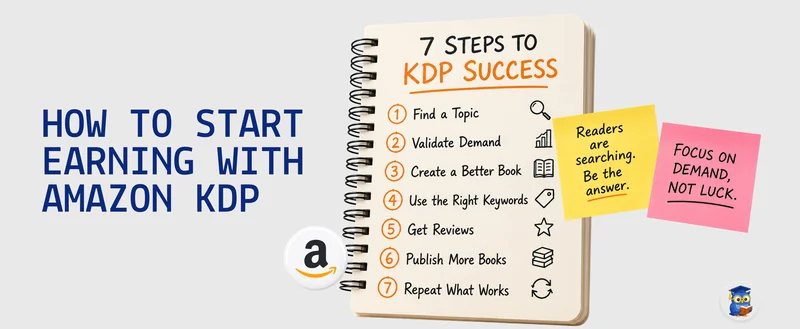
Step 1: Find a Topic Readers Already Search For
This is where many authors go wrong.
❌ They start by asking: "What do I want to write?"
✔️ Instead of: "What do readers want to read?"
In the self-publishing business, we call this "writing to market."
Remember that Amazon is a search engine. Readers type problems, interests, and goals into the search bar every single day.
Examples:
- Anxiety relief workbook
- Coloring book for kids
- Menopause guide
- Romance short stories
- Dog training book
So, your job is not to create demand. Your job is to find existing demand.
Helpful Tools You Can Use to Find Existing Demand
Free:
- Amazon autocomplete
- Amazon bestseller lists
- Google Trends
Paid:
Step 2: Validate Demand
Finding a topic is only the beginning. Next, you need to determine whether readers are actually buying books in that niche.
So, what should you look for to determine real-world demand?
- Evidence of consistent sales
Check the book's Best Sellers Rank (BSR). - Multiple competing books
How many books are showing up for the exact same topic?
More books=real demand. - Books with reviews
Are readers actively engaging with books in this niche?
Many new authors make the mistake of avoiding competition. In reality, competition often confirms there IS demand.
Step 3: Create a Better Book
Notice we didn't say, "Create the longest book" or "Create the cheapest book."
Your goal should be to create a better solution for readers. That might mean:
For Fiction:
- Better characters
- Better story arcs
- Better twists and flows
- Better character conflicts and tension
For Non-Fiction:
- Better organization
- Better design
- Better exercises
- Better reader experience
Readers WILL compare your book to alternatives. Give them a reason to choose yours.
Step 4: Use the Right Keywords
Amazon cannot sell a book it doesn't understand. Keywords help Amazon determine:
- WHAT your book is about
- WHO should see it
- WHICH keyword searches should it appear in
One of the simplest keyword exercises is this: Ask yourself... what would readers ACTUALLY type into Amazon?
❌ Not: "What should I call my book?"
✔️ But: "What words would readers type to find a book like mine?"
The closer your keywords match reader intent, the easier it becomes for Amazon to connect your book with potential buyers.
Step 5: Get Reviews!
Reviews are one of the most important visibility signals on Amazon. Imagine two nearly identical books.
Book A: 45 reviews
Book B: 3 reviews
Be honest, which one would YOU feel more comfortable buying?
And just like you, most readers choose the book with reviews because other readers have already validated it. Reviews provide:
- Trust
- Credibility
- Social proof
- Conversion power
Now, reviews don't just help readers. They help Amazon understand your book, too. How?
When a book consistently receives reviews, Amazon sees evidence that real readers are discovering, purchasing, and engaging with the book.
While Amazon doesn't publicly reveal exactly how its recommendation algorithms work, reviews are one of many signals that can indicate reader interest and engagement.
Think of it this way: "Readers are finding this book, buying it, and talking about it."
That's valuable information for Amazon.
The more positive signals Amazon receives, the more confidence it may have in showing your book to additional potential readers.
Step 6: Publish MORE Books
Many new authors treat their first book as if it must succeed. Experienced publishers think differently.
One book is a product. Multiple books become a catalog.
A larger catalog creates:
- More visibility
- More reader entry points
- More opportunities for sales
- More opportunities for reviews
Publishing a second, third, or tenth book often has a bigger impact than endlessly tweaking your first one.
Step 7: Repeat What Works
Successful publishers track results. They look at:
- Rankings
- Reviews
- Sales
- Reader feedback
Then they ask: "What is working?"
The goal is not to reinvent the wheel every time. It's to identify successful patterns and repeat them.
Many publishing businesses are built through consistent improvement rather than dramatic breakthroughs.
The Biggest Mistake New KDP Authors Make
If there's one lesson to take away from this article, it's this: Most authors start at the wrong step.
They write first, then research later.
There's nothing wrong with writing about a topic you're passionate about. However, if your goal is to also EARN from Amazon KDP, passion is not enough.
The 7-step framework in this article dramatically increases your chances of creating a book readers would actually find... and want to buy.
Final Thoughts
Amazon KDP is not a lottery ticket. It's a business.
The authors who succeed are usually the ones who consistently:
- Research readers
- Solve real problems
- Use effective keywords
- Build reviews
- Publish multiple books
The good news? You don't need to master everything at once.
Focus on these seven steps, improve a little with each book, and you'll be ahead of the vast majority of new publishers.
Because on Amazon, visibility comes before sales.
And sales come from creating books readers can actually find.
The Practical Next Step
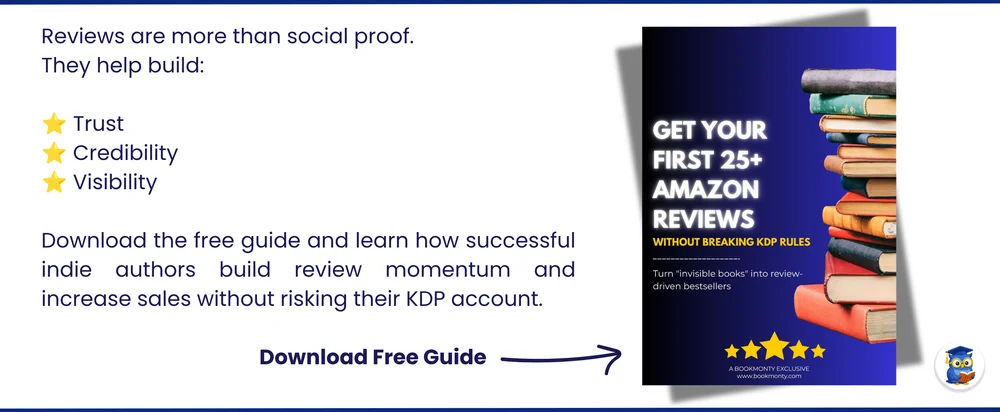
👇Download our FREE GUIDE:
Get Your First 25+ Amazon Reviews (Without Breaking KDP Rules)